


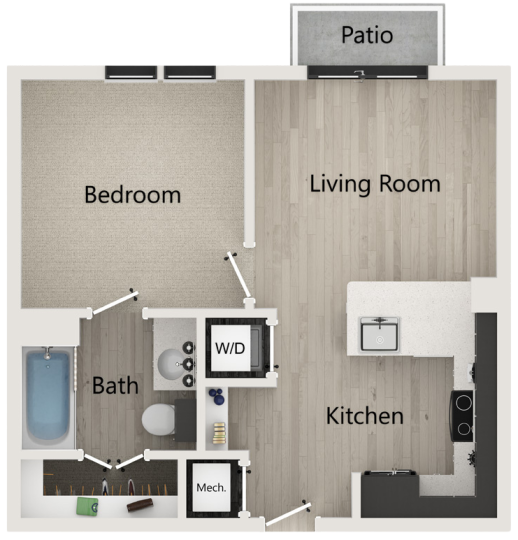
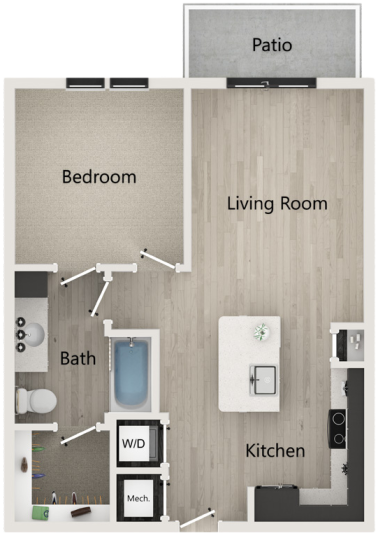
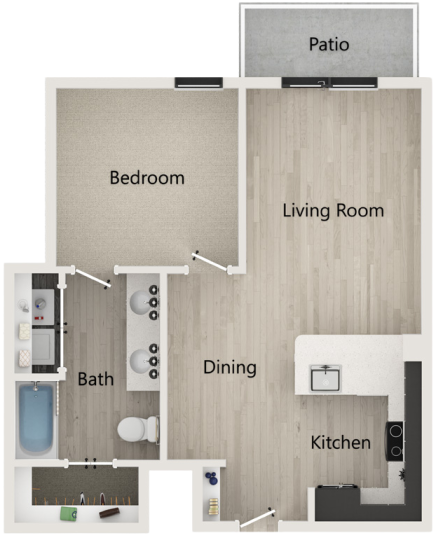
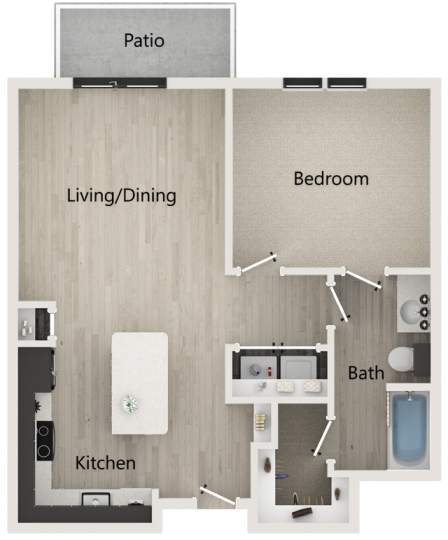
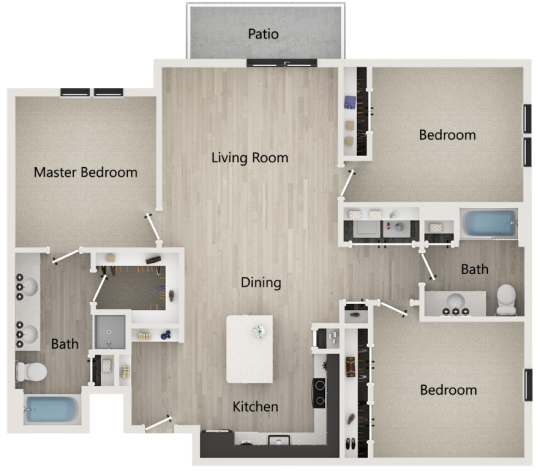
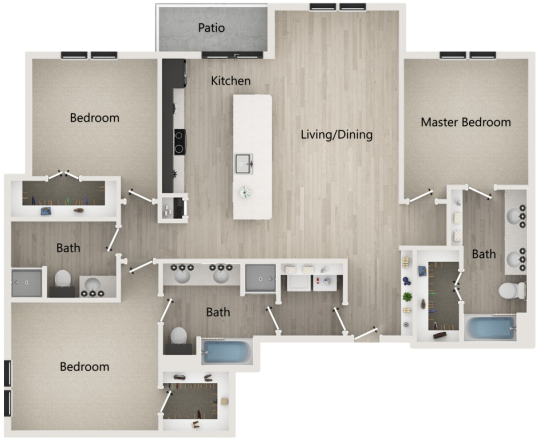
If you are looking for ADA apartments in Leander TX near Metro Rail, the most reliable options are communities close to CapMetro’s Leander Station that will specifically confirm accessible units, building location, and the path you would use to reach the train. The Conley, at 665 North Bagdad Road in Leander, states that it has ADA units available and is less than 2 miles from Leander Metro Rail Park, so it belongs on that shortlist, but you should verify the exact apartment, route, and station access details before you decide.
That matters because “near Metro Rail” and “ADA” are both more specific than they sound. A property may be close on a map, but the real question is whether the individual home and the trip from your door to the station work for your daily routine, mobility device, caregiver support, parking needs, and train schedule.
What to check first when you need an ADA apartment near Leander Station
In Leander, the transit point most renters mean by Metro Rail is CapMetro’s Leander Station, the northern end of the MetroRail Red Line. That line connects Leander to stops farther south, including stations in Northwest Austin, North Austin, East Austin, and downtown Austin. If your goal is rail access for work or school, confirming that you will actually use Leander Station is the first step, because that determines whether a home on the north or west side of town still makes sense for your trip.
Next, ask about the apartment itself, not just the community. “ADA unit” can refer to a home built or designated with accessibility features, but renters often need to know the details that affect daily use, such as whether the home is on the ground floor, how many thresholds are on the route, whether parking can be close by, and whether the bathroom and kitchen layout fit a wheelchair or walker. Those are practical questions, and they are appropriate to ask before you apply.
At The Conley, the public information is clear on one point: the community says it does have ADA units, and availability should be confirmed with the office. It is also important that the same public information says the community does not have elevators. For some renters, that does not rule the property out at all, because a first-floor accessible home may still work well. For others, especially anyone who wants flexibility to choose an upper-floor home later, the lack of elevators is a meaningful limitation to weigh early.
Also ask the leasing team to describe the route from the specific ADA apartment to where you would start your MetroRail trip. A community can honestly say it is near the station, while the most usable path for you may still depend on curb cuts, sidewalk continuity, lighting, gate access, parking location, or whether you plan to arrive at the station by car, rideshare, mobility device, or a combination of methods. A good tour for this search should include the route, not just the model home.
How to evaluate “near Metro Rail” in real life, not just on a map
For this question, map distance is only a starting point. The Conley states that it is less than 2 miles from Leander Metro Rail Park, which suggests a short local connection to the station area. But two renters can experience that same distance very differently. Someone driving to the park-and-ride may find it simple, while someone relying on a wheelchair or walker may need to know whether the full path is comfortably usable from start to finish.
Leander Station is known primarily as a park-and-ride endpoint for the Red Line, so many renters use it by driving over, parking, and boarding from there rather than walking the whole trip from home. If that is your likely pattern, then the apartment search shifts slightly. You still need an accessible home, but you also need to think about how easy it is to get from your apartment to your vehicle, how often you will do that trip, and whether station parking and boarding are easier for you than a fully pedestrian commute.
If you hope to walk or roll to rail regularly, verify the route in person and at the time of day you would actually travel. Look for continuous sidewalks, crossings at busier roads, the slope of any ramps, the condition of pavement after rain, and whether the walk feels manageable both to the station and back home. A route that looks reasonable online can feel very different once heat, darkness, traffic, or uneven surfaces are part of the equation.
It is also worth checking CapMetro’s current station and service information directly before you lease. Train schedules, boarding details, parking conditions, and accessibility notices can change over time. The most practical way to verify is to review the current Leander Station information on CapMetro’s website, then compare that with an in-person apartment visit so you can judge the whole trip, from front door to platform, rather than relying on assumptions.
How The Conley fits this search, and what to confirm before applying
The Conley is relevant to this search for two straightforward reasons. First, it says ADA units are available. Second, it identifies itself as less than 2 miles from Leander Metro Rail Park. Those are the two core facts a renter asking this question usually needs to screen properties quickly.
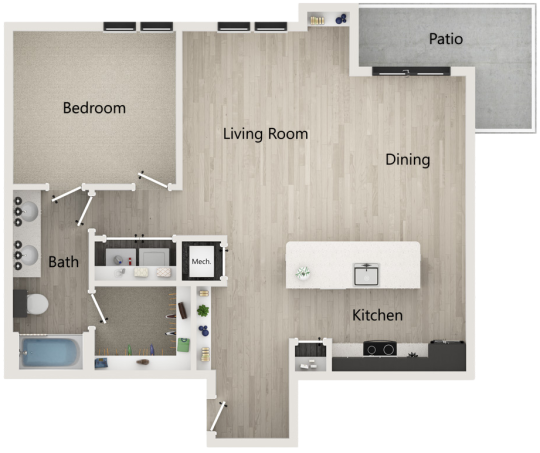
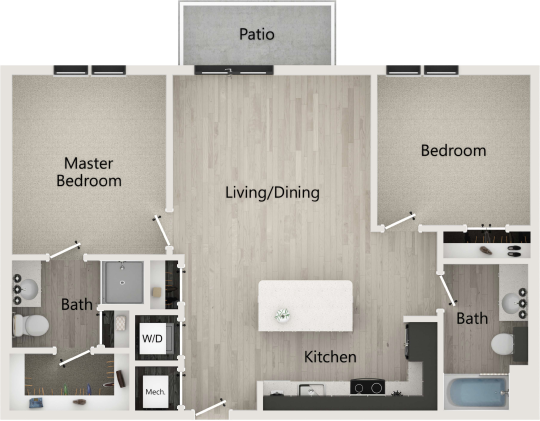
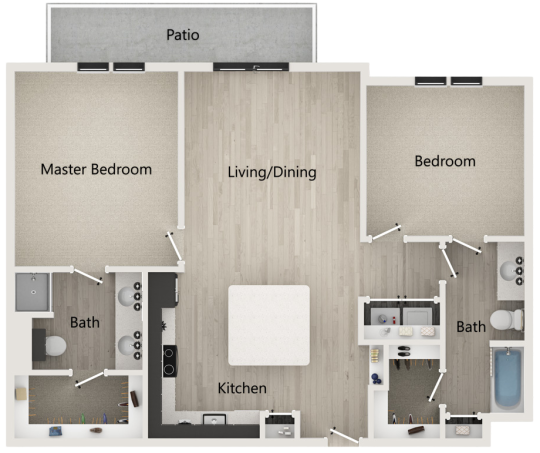
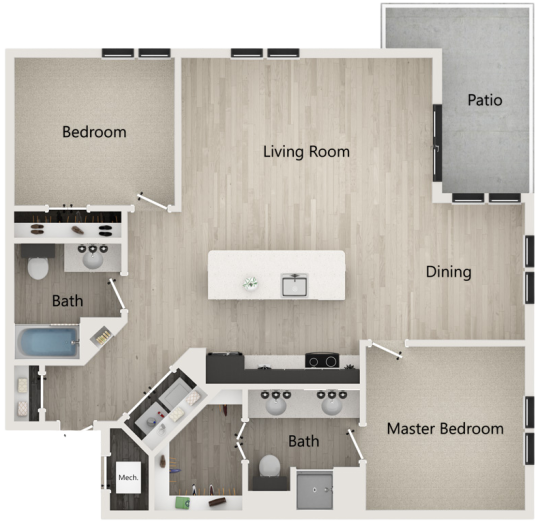
Several property details may matter once the search gets more specific. The community offers one-, two-, and three-bedroom floor plans, which can be helpful if you need space for a caregiver, home office, medical equipment, or a second occupant who shares commuting responsibilities. Included washer and dryer service in the apartment can also reduce the need to carry laundry across the property, which may be a meaningful convenience for some residents.
There is one trade-off that should be discussed plainly: The Conley does not offer elevators. That does not tell you whether a particular ADA home will or will not work, but it does mean you should ask to see the exact building and floor location of any available accessible apartment. If rail access is part of a daily routine, minimizing stairs and unnecessary transfers between parking, home entry, and the route out of the community can matter as much as the train ride itself.
When you contact the leasing office, keep the questions narrow and practical. Ask whether there is a currently available ADA apartment, whether it is on the ground floor, what the route is from that home to parking or pickup, and whether staff can walk the route with you during a tour. If MetroRail access is central to your decision, a useful next step is to schedule that route-focused visit during office hours, Monday through Saturday, and then compare what you see on site with CapMetro’s current Leander Station information before making a final choice.